
Aquaculture and the Future of Sustainable Seafood
There are two main ways to produce seafood: catching fish in the wild or farming aquatic organisms through aquaculture. Aquaculture includes not only fish farming, but also the cultivation of shellfish, crustaceans, and aquatic plants such as seaweed.
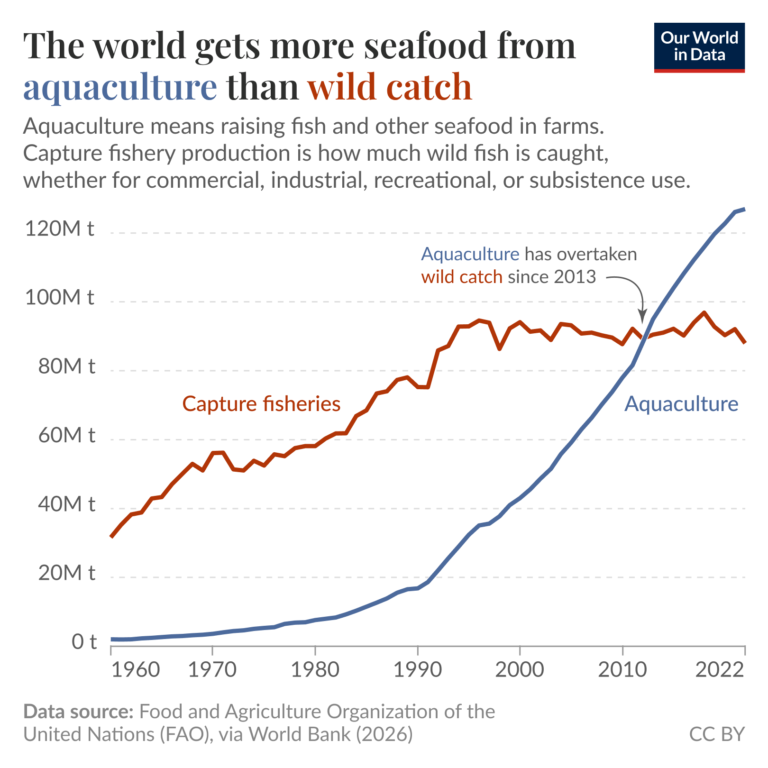
Over the last few decades, aquaculture has expanded rapidly. As the chart shows, it grew from a very small share of global seafood production in the 1960s to become the larger source of seafood production by 2022, overtaking capture fisheries in the 2010s.
This shift is important because it has helped reduce some of the pressure on wild fish stocks. If rising global demand for seafood had been met only through wild capture, the pressure on marine ecosystems and overexploited fish populations would likely have been much greater.
Understanding this transition is essential for thinking about the future of the Blue Economy, where food production, sustainability, innovation, and marine conservation must go hand in hand.
For the NextGen Blue project, aquaculture is an important example of how the Blue Economy is changing. It shows how innovation in food production can help respond to growing demand while also creating new career opportunities in sustainable fisheries, marine science, farm management, environmental monitoring, and blue entrepreneurship. By exploring trends like the rise of aquaculture, NextGen Blue helps young people and youth workers better understand how marine sectors are evolving and why sustainable solutions will be central to the future of oceans, coastal communities, and blue careers.